
Introduction For rank new website on Google
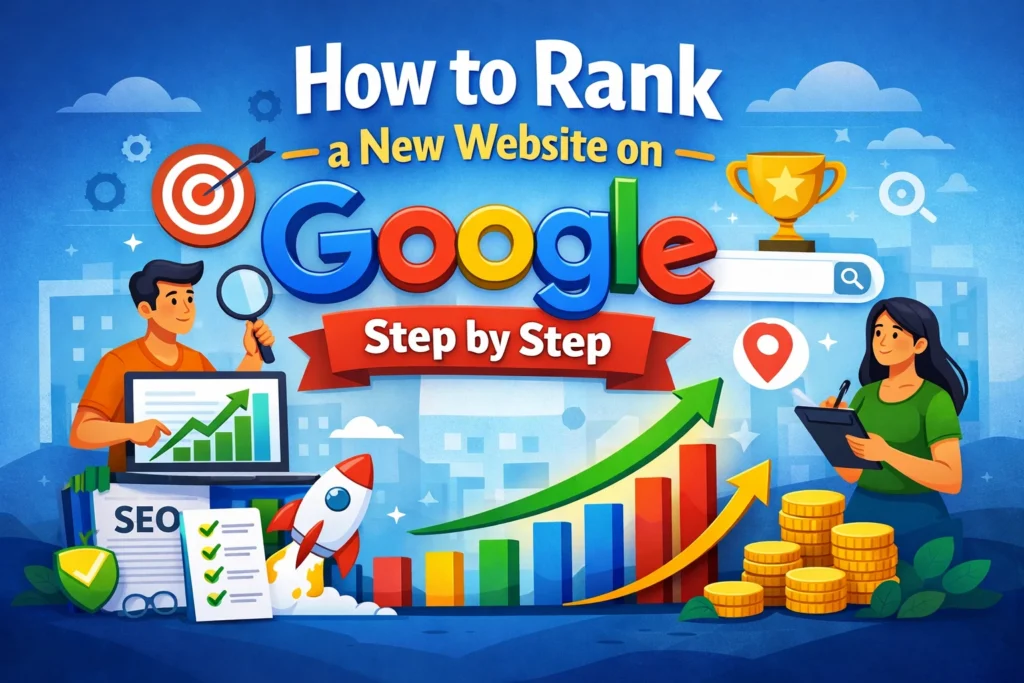
Launching a new website is exciting, but one common question worries every business owner: how to rank a new website on Google? At Fiveline Digital Tech, we regularly interact with startups and small business owners who feel disappointed when their new website doesn’t show up on Google even weeks after launch.
In the early stages, Google takes time to understand and evaluate a new website before giving it visibility in search results. New sites have no authority, backlinks, or user signals in the beginning. That’s why ranking takes time—and the right approach.
The good news is that Google does rank new websites when they follow ethical and structured SEO steps. In this step-by-step guide, based on real-world experience at Fiveline Digital Tech, you’ll learn practical and beginner-friendly ways to rank a new website on Google, especially for Indian businesses.
Step 1: Build a Strong SEO Foundation
Before working on rankings, your website must be technically ready.
Check these basics first:
- Enable HTTPS (SSL certificate)
- Make the site mobile-friendly
- Improve page loading speed
- Fix broken links and errors
- Use a clean, simple website structure
Google prefers websites that provide a smooth and secure user experience. Without this foundation, SEO efforts won’t give proper results.
Step 2: Choose the Right Keywords for a New Website
Many new website owners slow down their growth by aiming for keywords that are already dominated by established brands.
Instead, focus on low to medium competition keywords.
Best keyword types for new websites:
- Long-tail keywords
- Location-based keywords
- Question-based keywords
Example:
- ❌ SEO services
- ✅ SEO services for small businesses in India
Use your main keyword rank new website on Google naturally within the content, headings, and meta details.
Step 3: Create Important Pages First
Don’t rush to publish too many pages. Start with essential pages that explain your business clearly.
Must-have pages:
- Home
- About Us
- Services
- Contact
- Blog
Each page should clearly answer:
- What you do
- Who you help
- How users can contact you
Clear information builds trust with both users and Google.
Step 4: Publish Helpful Blog Content Regularly
Blogging helps Google understand what your website is about and brings organic traffic.
Write blogs that:
- Solve real problems
- Answer common questions
- Use simple English
- Are easy to read on mobile
Good blog ideas for new websites include:
- Beginner guides
- Step-by-step tutorials
- Common mistakes to avoid
Helpful content builds long-term visibility and authority.
Step 5: Optimize On-Page SEO Properly
On-page SEO helps Google understand your content better.
Optimize these elements:
- SEO-friendly page title
- Meta description with intent
- Proper H1, H2, H3 headings
- Image alt text
- Clean URL structure
Avoid keyword stuffing. Use keywords naturally and focus on readability.
Step 6: Submit Your Website to Google Search Console
Google Search Console is essential for new websites.
It helps you:
- Get pages indexed faster
- Identify crawl errors
- Track keyword impressions
- Monitor website performance
After submitting your website, Google starts discovering and understanding your content more efficiently.
Step 7: Use Internal Linking Smartly
Internal links connect your pages and guide visitors.
Benefits of internal linking:
- Improves page indexing
- Distributes SEO value
- Increases time spent on site
Internal linking suggestion:
Link this article to a related post like “On-Page SEO Checklist for New Business Websites” on your site.
Step 8: Build Safe and Genuine Backlinks
Backlinks help Google trust your website, but quality matters more than quantity.
Safe backlink ideas:
- Business directories
- Local listings
- Guest articles on relevant blogs
- Social media profiles
Avoid buying backlinks or using spammy methods. Slow and steady link building works best for new websites.
Step 9: Focus on Local SEO for Faster Results
If your business serves a specific location, local SEO can help you rank faster.
Important local SEO steps:
- Create and optimize Google Business Profile
- Add correct name, address, and phone number
- Collect genuine customer reviews
- Post updates regularly
Local SEO is especially effective for Indian service-based businesses.
Step 10: Be Patient and Stay Consistent
SEO results don’t appear instantly.
General timeline:
- 1–2 months: Indexing and impressions
- 3–6 months: Gradual traffic growth
- 6+ months: Stable keyword rankings
Consistency is the key to ranking a new website on Google.
Common Mistakes to Avoid
- Copying content from other websites
- Targeting only high-competition keywords
- Ignoring mobile optimization
- Expecting instant results
Avoid shortcuts and focus on long-term SEO practices.
Conclusion
Ranking a new website on Google is not about quick tricks or shortcuts. It’s about building trust, relevance, and value step by step. When you focus on strong fundamentals, smart keyword selection, helpful content, and consistent SEO efforts, results follow naturally.
At Fiveline Digital Tech, we believe that SEO success comes from patience and clarity, not overnight promises. Even a brand-new website can grow steadily if the right strategy is followed from day one.
Begin with manageable steps, maintain regular SEO efforts, and continuously refine your website as it grows. Over time, Google will recognize your efforts, and your new website will gain visibility, traffic, and long-term growth.