
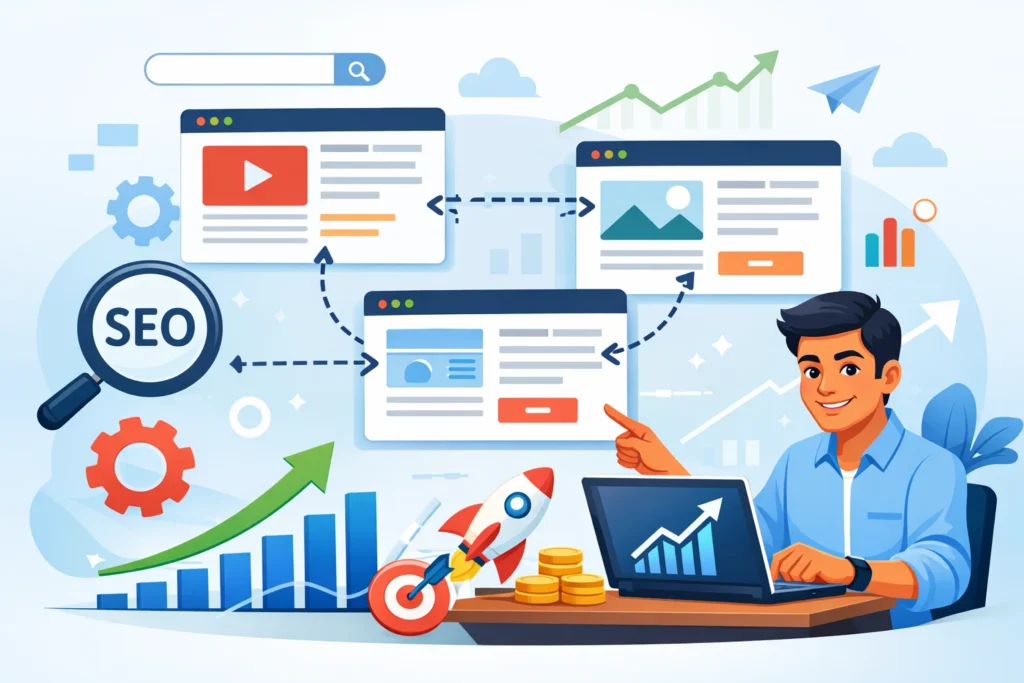
Internal linking for SEO plays a major role in how search engines understand and rank your website. It refers to linking one page of your website to another relevant page within the same domain. When done correctly, internal linking improves website navigation, boosts page authority, and helps users find useful content easily.
For Indian websites and blogs like Fiveline, internal linking is especially important because it helps search engines discover new content faster while keeping visitors engaged for longer. Many website owners focus only on keywords and backlinks but ignore internal links, even though they are fully under your control. A smart internal linking strategy improves SEO performance and increases organic traffic without extra cost.
In this article, you’ll learn how internal linking works, why it matters for SEO, and how to use it effectively to grow your website traffic naturally.
What Is Internal Linking?
Internal linking means connecting one page of your website to another page on the same website. These links help both users and search engines move through your content smoothly.
For example, a blog post about SEO basics can link to another article on keyword research. This creates a clear relationship between related topics.
Internal links help:
- Search engines crawl your website efficiently
- Users discover relevant content easily
- Important pages gain more visibility
Why Internal Linking for SEO Is Important
Internal linking for SEO helps search engines understand the structure and hierarchy of your website. When pages are properly connected, search engines know which content is important and how topics are related.
Key SEO benefits include:
- Better crawling and indexing of pages
- Improved keyword relevance across pages
- Stronger page authority distribution
- Reduced bounce rate and better user engagement
For content-driven websites like Fiveline, internal links ensure that valuable articles don’t remain hidden and continue to bring long-term traffic.
How Internal Linking Improves Website Traffic
Internal links guide visitors to additional useful content instead of letting them leave after reading one page. This increases session duration and page views, which are positive signals for SEO.
Internal linking helps traffic growth by:
- Keeping users engaged on your website longer
- Highlighting older but valuable blog posts
- Supporting content discovery through logical navigation
When readers easily find related articles, they trust your website more and return again.
Types of Internal Links You Should Use
1. Contextual Links
These are links placed naturally within content paragraphs. They are the most powerful for SEO because they provide clear relevance.
2. Navigation Links
Links in menus, headers, and footers help users move across main sections of your website.
3. Related Post Links
These links suggest similar content at the end or side of articles, improving user experience.
Best Practices for Internal Linking
Follow these proven internal linking practices for better SEO results:
- Use clear, descriptive anchor text
- Link to relevant and useful pages only
- Avoid overloading a page with too many links
- Ensure every important page receives internal links
Anchor Text Tips
Good anchor text tells users and search engines what the linked page is about. Avoid generic words like “click here” and use meaningful phrases instead.
Common Internal Linking Mistakes to Avoid
Many websites unknowingly harm their SEO by making simple internal linking mistakes.
Avoid these issues:
- Linking unrelated pages without context
- Using the same anchor text repeatedly
- Ignoring old blog posts
- Creating orphan pages with no internal links
Fixing these problems can instantly improve crawlability and SEO performance.
How to Build an Internal Linking Strategy
A structured approach works best for long-term results.
Step-by-step approach:
- Identify your important pages
- Link supporting articles to main pages
- Update old content with new internal links
- Maintain a logical content flow
Websites like Fiveline benefit greatly when blog posts are grouped by topic and internally connected.
Internal Linking and User Experience
Internal linking isn’t only about SEO. It improves usability by helping visitors find answers faster.
A well-linked website:
- Feels easy to navigate
- Builds reader trust
- Encourages deeper exploration
When users enjoy browsing your site, search engines notice the positive engagement signals.
Internal vs External Links: Know the Difference
Internal links connect pages within your website, while external links point to other websites. Both are useful, but internal links give you full control.
Trusted SEO guidelines from Google Search Central emphasize the importance of clear internal linking for website structure and discoverability.
Conclusion
Internal linking for SEO is one of the simplest yet most effective ways to improve search rankings and website traffic. It strengthens site structure, improves user experience, and helps search engines understand your content better.
By following internal linking best practices, updating old posts, and linking related content naturally, websites like Fiveline can grow organic traffic steadily without relying only on external backlinks.
Start small, stay consistent, and focus on creating meaningful connections between your pages for long-term SEO success.